Renders don't sell. Belief does.
Buyers don't commit to pixels, they commit to certainty. What fifteen years of selling unbuilt spaces taught me about the difference between a pretty image and a persuasive one, and the deliberate craft choices that move a decision.
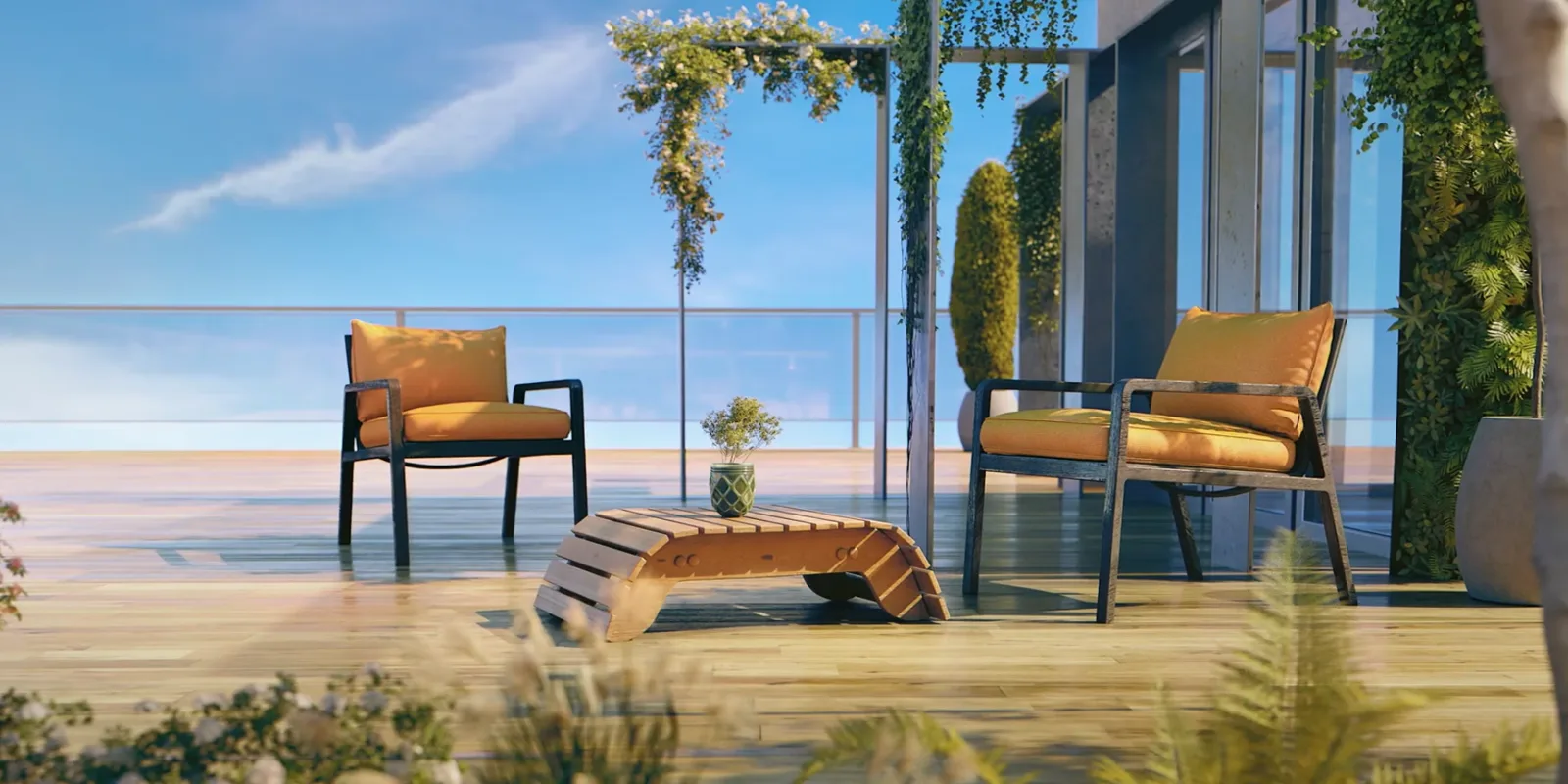
I have watched a lot of people look at a lot of renders. Sales lounges, boardrooms, exhibition stands, a phone passed across a café table. And I can tell you the exact moment an image starts working, because the question changes.
It stops being "is this accurate?" and becomes "is that where I'd have my coffee?" That switch, from inspection to imagination, is the entire job. A render that never triggers it is just an expensive drawing, no matter how clean the reflections are.
Beautiful is the entry fee. Believable is the sale. Most visualization stops at the first and wonders why it doesn't close.
Accuracy is table stakes, not the product
Developers often brief me as if photorealism were the goal. It isn't. Photorealism is the minimum credibility required for the real goal, which is to move a decision. A perfectly accurate image that leaves the viewer cold has failed at the only thing it was hired to do. I have seen technically flawless renders sell nothing, and slightly looser images move a whole phase, because the second set understood who had to believe and what they needed to feel.
So before I model a single wall I ask three questions. Who has to believe, the end buyer, the investment committee, the planning authority? What do they need to feel to say yes, safety, status, confidence, permanence? And where will this image meet them, a phone thumbnail, a six-metre billboard, a boardroom projector? Those answers set the lens, the light, the composition, and the level of restraint. Skip them and you are decorating, not persuading.
Why the dusk shot works, and when it lies
Every developer asks for the dusk shot and most can't say why it works. Here is the mechanism: warm interior light glowing against a cooling sky reads, at a level below conscious thought, as safety. Home before dark, shelter as the world dims. It is older than architecture and it bypasses the rational brain entirely. That is why it sells.
But dusk is a tool, not a default, and used carelessly it becomes a promise the building cannot keep. Sell a north-facing family apartment on golden light it will never actually receive and you have manufactured a complaint for handover day. I light for the story a space can genuinely keep. The most persuasive image is one the finished building will not contradict, because your credibility on this launch is the currency you spend on the next one.
Perfection is suspicious. Stage evidence of life.
The cleanest render in the world has a quiet problem: nobody lives there. Empty perfection reads as a showroom, and a showroom is a place you visit, not a home you commit to. Real belief comes from imperfection placed with intent. A book left open on the arm of a sofa. A single mug on the counter. A rug sitting very slightly off-square, the way a real rug does. A towel that isn't folded to hotel standard.
Buyers do not consciously notice these things, and that is exactly the point. What they notice is their absence, as a vague sense that something is off, that this space is a render and not a life. Staging is not decoration. It is evidence that a human being could exist here, and it is one of the most underrated levers in the entire craft.
The camera is a promise
Camera height is the most honest choice in a visualization. Eye level, around one-point-five metres, says: this is how it will feel to stand here, this is your view. A hero angle from thirty metres up says: admire this object. Both are legitimate, but they make different promises, and a sales gallery filled with drone-height hero shots has quietly told the buyer to admire the building rather than imagine living in it.
The lens matters just as much. Wide angles flatter square footage and are the native tongue of real estate, but push them too far and the room stops feeling like a place and starts feeling like a fisheye trick, and some part of the viewer distrusts it without knowing why. I choose the focal length a human eye would actually use for the shot that has to feel true, and I save the wide dramatic lens for the shots that are openly selling scale.
The test I run on every image, including my own
Cover the logo and the specification sheet. Strip away the brand and the price. Does the image still make someone want to be inside it? If yes, it will sell. If no, it is decorating a brochure and no amount of render time will fix that, because the problem was never the pixels.
Fifteen years in, that is the whole discipline distilled. The software changes, the render engines get faster, the resolution climbs. The job stays exactly the same: turn a space that does not exist yet into something a person can believe in enough to commit real money to. Everything else is in service of that, or it is noise.

Moustafa Moussa
3D technical art director. I make the unbuilt feel real.